
East Valley Real Estate FAQs, Tips & Community News

Whether you're buying your first home in Gilbert, selling in Chandler, or exploring new construction in Queen Creek or San Tan Valley, you've come to the right place. This resource hub is designed to answer the most common real estate questions we hear from Arizona buyers and sellers — and to keep you informed with the latest local market insights and community news across the East Valley.

Frequently Asked Questions About East Valley Real Estate

Is now a good time to buy a home in the East Valley?

The East Valley — including Gilbert, Chandler, Mesa, Queen Creek, and San Tan Valley — remains one of the most desirable real estate markets in Arizona. While market conditions shift, working with a local agent ensures you get current data on home prices, inventory, and interest rates specific to your target neighborhood.

How do I know what my East Valley home is worth?

Home values in the East Valley vary by community, lot size, upgrades, and recent comparable sales. A free Comparative Market Analysis (CMA) from a local real estate professional is the most accurate way to determine your home's current market value.

What are the best neighborhoods in Gilbert and Chandler for families?

Gilbert and Chandler consistently rank among the safest and most family-friendly cities in Arizona. Popular master-planned communities, top-rated schools, parks, and easy freeway access make both cities a top choice for relocating families and move-up buyers.

How long does it take to buy or sell a home in Arizona?

In Arizona, most residential transactions close within 30–45 days of an accepted offer. Selling timelines vary based on pricing, condition, and current market demand. Browse our latest articles below for up-to-date guidance on buying and selling in today's East Valley market.

Scroll down to explore our latest blog posts, local market updates, and expert real estate tips for the East Valley.

May 22, 2026

How to Make a Competitive Offer on a House in Gilbert, AZ in 2026

How to Make a Competitive Offer on a House in Gilbert, AZ in 2026

How do you make a competitive offer on a house in Gilbert, AZ?

In Gilbert's 2026 balanced market, a competitive offer starts with a fully underwritten pre-approval — not just a pre-qualification — plus earnest money of 1–2% or more, a clean contract structure, and flexibility on closing date. Homes in Gilbert are averaging 53 days on market and selling at about 97.9% of list price as of spring 2026, so you're rarely in a situation that requires waiving your inspection or offering $50,000 over asking. But a sloppy offer without strong financing documentation gets passed over fast, even in a balanced market.

By Megan & Jason Williams | May 22, 2026

The days of waiving your inspection and writing personal letters begging a seller to pick you are mostly over in Gilbert. The market has shifted — and that's genuinely good news if you're buying in 2026.

But "the market has shifted" doesn't mean you can make a lazy offer and expect it to work. It means the strategy has changed. Sellers are more negotiable than they were in 2021. Bidding wars happen less often. And if you know what you're doing, you can structure an offer that gets accepted and includes terms that actually protect you.

Here's how we walk our buyers through this right now.

What "Competitive" Actually Means in Gilbert Right Now

Gilbert homes are sitting about 53 days on market on average in spring 2026, with a 1.36-month supply of inventory and homes selling at 97.87% of their list price. That's a balanced market — not a full buyer's market, but not the seller-favored frenzy of 2022 either.

What that 97.87% means in practice: on a $750,000 home, buyers are typically paying around $733,000 — about $17,000 under list. That gap comes from a combination of price negotiation, closing cost credits, and repair credits after inspection.

Bidding wars still happen on desirable, well-priced homes — especially in communities like Morrison Ranch and Power Ranch where new inventory is limited. But they're not the rule anymore. Most sellers in Gilbert right now are prepared to negotiate, and many are motivated after 7+ weeks on market.

Queen Creek is slightly more buyer-friendly than Gilbert — homes are averaging closer to 89 days on market, with about 2.22 months of supply. If your search includes both cities, you generally have more leverage in Queen Creek right now.

The Offer Itself: What Makes It Competitive

Start with the right pre-approval

This is where most buyers make their first mistake — and sellers screen for it immediately.

A pre-qualification is not enough. Most Gilbert sellers and their agents expect to see an AAR Pre-Qualification Form with the "Income Verified" and "Assets Verified" boxes checked. If those boxes aren't checked, your offer signals risk. In competitive situations, a seller will take a lower offer with a fully underwritten pre-approval over a higher offer with a flimsy pre-qual every time.

A fully underwritten pre-approval means a lender has actually verified your income and assets — not just run numbers through an online calculator. Get this done before you start making offers, not while you're under contract pressure. This one step separates serious buyers from the rest of the field.

If you haven't already signed a buyer-broker agreement with your agent, that conversation should happen before you tour homes — your agent is the one who knows which lenders' letters carry weight with local listing agents.

Earnest money: go above the minimum

In Arizona, the standard earnest money deposit is 1–3% of the purchase price, due within 3 business days of contract acceptance. On a $750,000 home, that's $7,500–$22,500.

Higher earnest money signals commitment to the seller. If you're buying in a community where you know you want the house — Power Ranch, Morrison Ranch, Seville — consider coming in at 2–3% rather than the minimum. It costs you nothing if you close (it applies toward your purchase), and it tells the seller you're serious enough to put real money at risk.

Understand that Arizona's earnest money is at risk during the inspection period contingency window — meaning if you cancel for a reason not covered by your contingencies after the inspection period ends, you could forfeit it. Your agent should walk you through the exact timeline and protections before you write the check.

Structure your offer to reduce seller risk

Sellers aren't just evaluating price. They're evaluating certainty — can this buyer actually close, and how many ways can this deal fall apart?

Here's what a clean, low-risk offer structure looks like in Gilbert right now:

  • Fully underwritten pre-approval attached — not a pre-qual letter
  • Standard 10-day inspection period — don't waive it in this market; there's no need to
  • Appraisal contingency intact — keep it unless you have specific reasons to waive
  • Loan contingency intact — this protects you if financing falls through
  • Flexible closing date — ask the seller what timeline works for them. Being flexible on this costs you nothing and can make your offer stand out when everything else is equal.

What You Can Ask For in This Market

Here's the part buyers often underestimate: in the current Gilbert market, you have real room to negotiate terms that weren't available in 2021 or 2022.

Closing cost credits. Sellers contributing 2–3% toward your closing costs is completely standard in this market, particularly on homes that have been sitting 30+ days. On an $800,000 purchase, that's $16,000–$24,000 that stays in your pocket at close. Understanding your real total monthly cost — mortgage, taxes, HOA, insurance — helps you decide how aggressively to ask for these credits. We break that full picture down in our monthly cost guide for $700K–$1M homes in Gilbert.

Repair credits after inspection. Request a general home inspection — ideally with a separate HVAC inspection and a roof inspection on homes more than 10 years old. After inspection, you can negotiate repairs or a credit based on findings. This is expected in the current market, not aggressive. Focus requests on material defects: HVAC condition, roof life expectancy, plumbing, and electrical — not cosmetic items.

Rate buydown contributions from the seller. Rather than (or in addition to) a price reduction, ask the seller to contribute to a permanent rate buydown. On an $800,000 loan, buying down your rate by 0.5% saves you nearly $250/month for the life of the loan — often more impactful than the equivalent purchase price reduction.

Escalation clauses are worth understanding, even if you don't use one every time. An escalation clause says: "We'll pay our offer price, but if another offer comes in higher, we'll beat it by $X — up to a maximum of $Y." They're useful on newly listed, well-priced homes in sought-after communities. They're overkill on a home that's been sitting 60 days. Your agent will know which situations call for one.

A Note on New Construction in Queen Creek

If you're making an offer on new construction in Queen Creek or San Tan Valley, the process is different. You're negotiating with the builder's sales representative, not a motivated homeowner, and the contract form is the builder's standard agreement — not the Arizona Association of REALTORS® contract.

The negotiation levers are: upgrades, closing cost credits, and rate buydowns. Builders in active Queen Creek communities are still offering incentives in 2026, but the window is tightening as builders move product and scale back programs.

One critical point: always bring your buyer's agent when you first visit a builder's sales office. If you register without representation, you may not be able to add your agent later — and the builder's rep is there to represent the builder, not you. We cover everything you need to know about new construction vs. resale in Gilbert and Queen Creek if you want to go deeper on that comparison.

The Offer Isn't Just the Price

The best offer on a Gilbert home in 2026 isn't necessarily the highest one. It's the one that gives the seller the most confidence they'll close — at a price they can live with, on a timeline that works for them, from a buyer whose financing is airtight.

That combination — price, terms, certainty — is what we focus on with every buyer we work with. Over 18 years and 700+ transactions in this market, the difference between an accepted offer and a passed-over one is almost never just price.

Every situation is a little different. The right offer strategy depends on the specific property, how long it's been sitting, whether other buyers are interested, and what the seller's timeline looks like. That's the conversation we have with our buyers before they ever write a number down — and it's the conversation that puts you in a position to actually win.

Frequently Asked Questions

How much earnest money should I put down in Gilbert, AZ?

Standard earnest money in Arizona is 1–3% of the purchase price, due within 3 business days of contract acceptance. On a $750,000 home, that's $7,500–$22,500. In Gilbert's current market, offering 2% or more signals strong commitment to the seller. Earnest money goes toward your purchase at closing — it only becomes at risk if you cancel for a reason not covered by your contract contingencies after the inspection period ends.

Should I waive the inspection contingency to win an offer in Gilbert?

No — in Gilbert's current market, there's no need to waive your inspection to be competitive. With homes averaging 53 days on market and sellers motivated to close, you can keep a standard 10-day inspection period without it hurting your offer. Waiving inspection makes sense only in very specific situations with strong competing offers — not as a default strategy in 2026.

Can I ask for closing cost credits when buying in Gilbert in 2026?

Yes. Seller-paid closing cost credits of 2–3% are very common in the current Gilbert market, particularly on homes that have been sitting 30+ days. On an $800,000 purchase, that's $16,000–$24,000. Framing the credit as a contribution toward a rate buydown rather than a pure price reduction is sometimes more palatable to sellers — and more valuable to you over the life of the loan.

What's the difference between a pre-qualification and a pre-approval in Arizona?

A pre-qualification is typically an estimate based on unverified information — a lender runs numbers but hasn't confirmed your income or assets. A pre-approval means the lender has actually verified your income, assets, and credit. Arizona sellers and agents expect to see an AAR Pre-Qualification Form with the "Income Verified" and "Assets Verified" boxes checked. Without those boxes checked, your offer signals more risk to the seller.

How long does it take to close on a house in Gilbert, AZ?

Most financed purchases in Arizona close in 30–45 days from contract execution. Cash deals can close in 7–14 days. The Arizona escrow timeline runs through inspection, appraisal, underwriting, and signing. Offering flexibility on your close date — asking the seller what timeline works for them — can strengthen your offer significantly at no cost to you.

If you want to walk through what your offer strategy should look like — whether you're just getting started or already in active search — we'd love to help. Book a quick call with Megan & Jason at FindAZValleyHomes.com — no pressure, no pitch, just a straight conversation about what it takes to buy in this market right now.

About Megan & Jason Williams
Megan & Jason Williams are a husband-and-wife REALTOR® team with 18 years of experience and 700+ homes sold across the Phoenix East Valley. Based in Gilbert, Arizona, they specialize in helping relocation buyers and out-of-state families find the right home in Gilbert, Queen Creek, Chandler, and surrounding communities — with the no-BS, straight-talk approach you'd expect from people who made the move themselves. Reach them at 480-618-1890 or Megan@mail.homeinfoaz.com.


Posted in Buyer Tips
May 19, 2026

The Real Monthly Cost of Owning a Home in Gilbert, AZ

The Real Monthly Cost of Owning a Home in Gilbert, AZ


The Real Monthly Cost of Owning a Home in Gilbert, AZ

What does it actually cost to own a home in Gilbert, AZ per month?

Beyond the mortgage, Gilbert homeowners typically pay $700–$1,400 per month in additional ownership costs — including HOA dues, property taxes, utilities, and homeowners insurance. That number depends on your community, home size, and whether you have a pool. Starting April 2026, Gilbert water rates increased another 25%, adding a meaningful line item to every homeowner's monthly budget. If you're buying in the $700K–$1.2M range, your real monthly cost is likely closer to $5,000–$5,500 all-in, not $3,800–$4,200 like the mortgage calculator shows.

By Megan & Jason Williams | May 19, 2026

Most buyers focus on the mortgage payment when they're running the numbers. But if you're buying in Gilbert — especially in the $700K–$1.2M range — your actual monthly cost of ownership is likely $700 to $1,400 more than the mortgage alone.

That gap doesn't show up until after you close. And if it catches you off guard, it can turn a purchase that felt comfortable into one that feels stretched.

We walk every buyer through this before they make an offer. Here's what it looks like in 2026.

What the Mortgage Payment Doesn't Include

When lenders calculate your qualifying payment, they include principal, interest, property taxes, and insurance — collectively called PITI. But several real monthly costs get left out of that number, or are estimated so broadly they're nearly meaningless.

Here are the four categories you need to price out before you fall in love with a floor plan:

Property taxes. Gilbert sits in Maricopa County, where the effective property tax rate varies by zip code. In 85296, the effective rate runs around 0.43%. In 85298, it's closer to 0.49%. On a $750,000 home, that's roughly $3,225 to $3,675 per year — or $270 to $310 per month. Your lender's estimate will include this, but verify it against the specific parcel before you lock in a budget.

Homeowners insurance. Arizona averages about $2,344 per year — roughly $195 per month. For homes in the $700K–$1.2M range, premiums run higher. Get a quote before you make an offer, not after.

HOA fees. Most Gilbert neighborhoods have a homeowners association. Dues range from about $70 per month in lower-amenity communities up to $400 or more in premium master-planned developments. This is one of the widest variables in your monthly budget — and one of the most consistently underestimated.

Utilities. Electric bills in Gilbert are seasonal — manageable in winter, painful in summer. A home with a pool and a lawn can run $300–$500 per month for electricity in July and August alone. Gas, water, and trash round out the utility picture. And as of April 2026, water is more expensive than it was last year.

Gilbert HOA Fees: What to Expect by Community

If you're shopping in a master-planned community — which describes most of Gilbert's housing stock at the $700K–$1.2M level — you're paying HOA dues. Here's what the major communities look like right now:

  • Power Ranch: Starting around $236/month, varying by neighborhood (there are 11 sub-neighborhoods within Power Ranch). Dues have increased 11–12% per year for the last two years — budget accordingly.
  • Morrison Ranch: $429 per quarter, billed quarterly ($143/month). One of the more affordable HOAs for the amenity level you get.
  • Seville: Base dues run $70–$150/month depending on the section. Some premium areas run higher.
  • Layton Lakes / Waterston: $250–$350/month.
  • Luxury or heavily amenitized communities: $300–$450/month is common at the higher end.

Beyond monthly dues, budget for HOA transfer fees at closing — typically $100–$500 depending on the community — plus a working capital contribution from the buyer. Morrison Ranch, for example, has both a transfer fee and a resale disclosure fee.

If you're comparing communities and trying to understand how Gilbert stacks up against Queen Creek, Chandler, and other East Valley cities, the HOA fee is one of the first numbers to compare — not an afterthought once you're already in escrow.

The Gilbert Water Bill Just Got More Expensive

Here's what every buyer shopping in Gilbert needs to know right now: effective April 1, 2026, Gilbert water rates increased 25%. This is the third consecutive year of significant increases — rates went up 50% in 2024, another 25% in 2025, and again in 2026. The Town approved these increases to fund long-term water infrastructure tied to Colorado River supply planning.

For the average single-family home with modest outdoor use, a typical monthly water bill runs $80–$120. But homes with pools, lawns, or large lots use significantly more water — and summer watering pushes those bills considerably higher.

A home with an active pool and turf landscaping could see summer water bills of $200–$400 per month after the April 2026 increase. If you're buying a home with a large yard or extensive landscaping, that's a real number to build into your budget before you close — not a surprise you find in your first summer statement.

Natural gas runs $50–$80 per month year-round. Electricity is the big seasonal variable: $120–$180 per month in the mild season, $300–$500+ in peak summer, depending on home size and insulation quality.

Building Your Real Monthly Budget

Here's what a realistic monthly ownership cost looks like for a $750,000 home in Gilbert, using mid-range estimates for a community with a typical HOA and a pool:

Cost Category Monthly Estimate
Principal & interest (20% down, 7.0% rate) ~$3,994
Property taxes (0.46% effective) ~$288
Homeowners insurance ~$195
HOA dues (community average) ~$200
Electric (annual average, incl. summer) ~$230
Water & gas (post-April 2026 rates) ~$175
Pest control (recommended in AZ) ~$45
Pool service (if applicable) ~$150
Total monthly — no pool ~$5,127
Total monthly — with pool service ~$5,277

That's $883–$1,033 per month above the principal-and-interest payment alone. In a premium Power Ranch home with a pool and a lawn in peak summer, you could add another $200–$300 on top of that.

The mortgage calculator isn't lying — it's just incomplete. Your lender qualifies you on PITI. But your bank account has to cover all of it.

This is exactly the kind of number we build for every buyer before they make an offer. If you're working with us — or planning to — understanding how buyer representation works in Arizona means understanding that our job starts before escrow, not after it opens.

Your specific number depends on the community, the home's age and efficiency, and how you use the outdoor space. The only way to know what your number is: run it with someone who knows this market.


Frequently Asked Questions

How much are property taxes on a $700,000 home in Gilbert, AZ?

At an effective rate of 0.43–0.49% (depending on zip code), property taxes on a $700,000 Gilbert home run approximately $3,010–$3,430 per year, or $250–$286 per month. Your lender will include this in the escrow portion of your payment, but verify the specific parcel number with Maricopa County's assessor site before you finalize your budget.

Why did Gilbert water rates increase in 2026?

The Town of Gilbert approved a 25% water rate increase effective April 1, 2026 — the third increase in three years. The increases fund long-term water infrastructure tied to the town's Colorado River allocation planning. Homes with large lots, turf landscaping, or pools will feel this most during summer months.

Are HOA fees included in the mortgage payment?

No. HOA dues are a separate monthly payment made directly to the homeowners association, not to your lender. They are not included in your PITI calculation, which is why they're easy to underestimate. Budget for them independently when evaluating what you can afford.

What is the average homeowners insurance cost in Gilbert, AZ?

Arizona homeowners pay an average of $2,344 per year in homeowners insurance — roughly $195 per month. Premiums vary based on home value, construction type, and coverage levels. For homes in the $700K–$1.5M range, expect higher premiums; get a quote before making an offer, not after.

Do Gilbert HOA communities charge transfer fees at closing?

Yes. Most HOA communities in Gilbert charge transfer fees when a home changes ownership — typically $100–$500 — plus a working capital or capital improvement contribution from the buyer. Some communities also require a resale disclosure package fee. Ask about these during your inspection period so they don't surprise you at the closing table.


Knowing your actual monthly number — not just the mortgage — is how you buy a home without budget regret. Gilbert is a great place to own. The math just has to work for you before you sign.

If you want to build that number for a specific home you're considering, we're happy to walk through it with you. Connect with Megan & Jason Williams before you make an offer, and we'll make sure the full picture makes sense before you sign anything.


About Megan & Jason Williams
Megan & Jason Williams are a husband-and-wife REALTOR® team with 18 years of experience and 700+ homes sold across the Phoenix East Valley. Based in Gilbert, Arizona, they specialize in helping relocation buyers and out-of-state families find the right home in Gilbert, Queen Creek, Chandler, and surrounding communities — with the no-BS, straight-talk approach you'd expect from people who made the move themselves. Reach them at 480-618-1890 or Megan@mail.homeinfoaz.com.
Posted in Buyer Tips
May 19, 2026

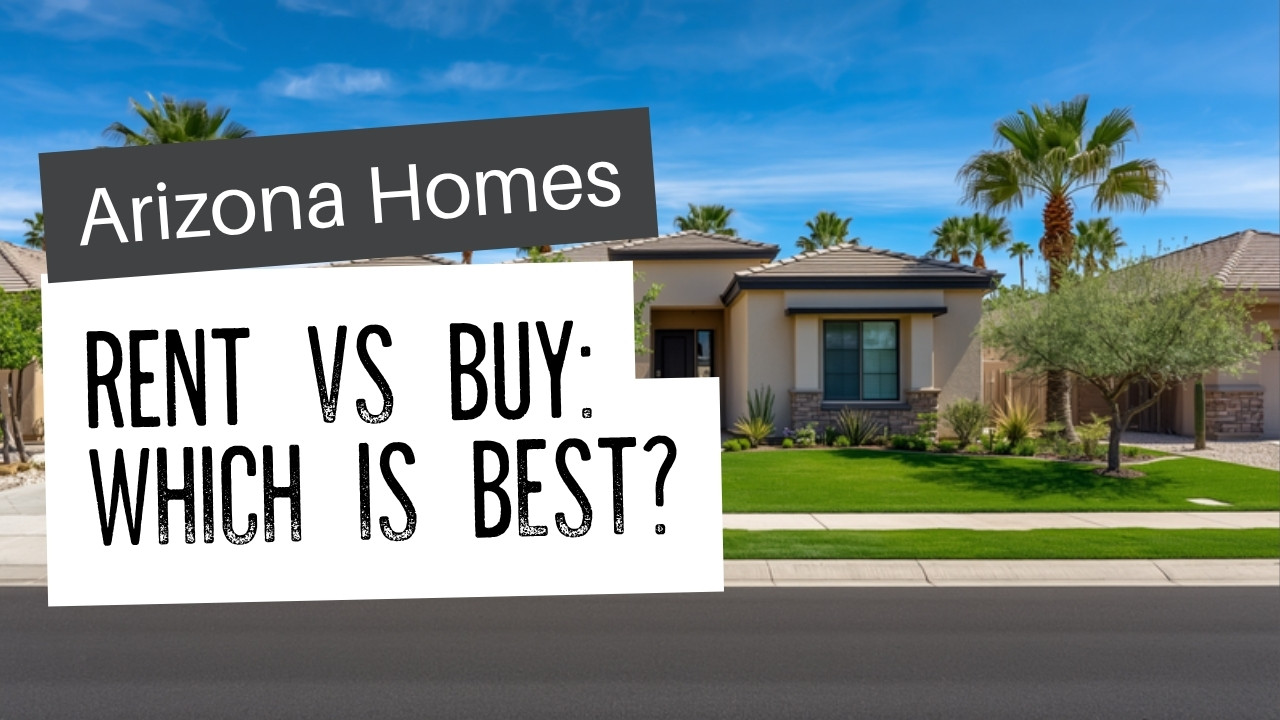
Renting vs. Buying in Gilbert, AZ: What the Numbers Say in 2026

Renting vs. Buying in Gilbert, AZ: What the Numbers Say in 2026

Renting vs. Buying in Gilbert, AZ: What the Numbers Say in 2026

Is It Better to Rent or Buy a Home in Gilbert, AZ Right Now?

In Gilbert, Arizona, renting a home averages around $1,800 per month, while buying a comparable home in the $600K–$700K range typically runs $3,800–$4,800 per month all-in when you factor in mortgage, property taxes, HOA, and insurance. The breakeven point — where buying becomes financially smarter than renting — is generally three to five years in Gilbert. If you’re planning to stay that long, 2026’s balanced market and limited land supply make a strong case for buying. If you’re still learning the area or might move within two years, renting first is a legitimate strategy.

By Megan & Jason Williams | May 19, 2026

This is the question we hear from people relocating to Gilbert more than almost any other — and it deserves a real answer, not a sales pitch.

Here’s the honest version.

The Monthly Cost Reality

Let’s start with what you’re actually paying each way.

Average rent in Gilbert runs around $1,800 per month for a single-family home or larger apartment. For a 3–4 bedroom house in a community like Power Ranch or near the Seville area, you’re looking closer to $2,200–$2,800/month.

Buying is a different picture. For a $700,000 home in Gilbert — which puts you in move-in-ready resale territory in Morrison Ranch or at a new construction entry point in Queen Creek — here’s what a typical all-in monthly cost looks like at a 6.75% rate with 10% down:

  • Mortgage (principal + interest, 30-year fixed): ~$4,065/month
  • Property taxes (Maricopa County, ~0.6% effective rate): ~$350/month
  • HOA fees (varies by community, $150–$350/month typical): ~$250/month
  • Homeowners insurance: ~$120/month
  • Total: approximately $4,785/month

That’s a real gap compared to renting. So why does buying still make sense for most people?

Because rent is a pure expense. Your mortgage is not.

We did a full deep-dive into the all-in ownership cost for $700K–$1M homes in Gilbert in our monthly cost breakdown guide, including utilities and maintenance reserves — worth reading before you run these numbers for yourself.

The Equity Math That Changes the Calculation

Every mortgage payment splits between interest (going to the lender) and principal (going to your net worth). In year one of a $700K purchase, you’re building roughly $1,000–$1,100 per month in principal equity — before any appreciation.

On top of that, Gilbert homes have historically appreciated at 3–6% annually over the long term, even accounting for recent softening. At a conservative 3% annual appreciation on a $700K home, you’re adding roughly $21,000 in value per year.

So your actual “cost to own” — net of equity gains and appreciation — is significantly lower than the sticker number suggests. The monthly payment comparison alone never tells the full story.

We walk our buyers through this math before they ever make an offer. It changes how people look at the decision.

When Buying Makes More Sense

Buying typically wins in Gilbert when:

You’re staying at least 3–5 years. That’s the general breakeven horizon when you factor in buying and selling costs — roughly 2–5% to purchase and 7–9% to sell later. If you’re planting roots, the math shifts heavily toward owning.

You’re in the $700K+ price range. At this price point, the appreciation and equity story is compelling. Gilbert’s limited land supply — the town is effectively landlocked now, with very little undeveloped land remaining — means long-term price pressure tends to be upward. You’re not competing with unlimited new construction here the way you might in San Tan Valley or parts of Queen Creek.

You can access builder incentives. In 2026, new construction builders in Queen Creek and parts of Chandler are still offering rate buydowns and closing cost credits. At the right property with the right incentive, a buyer can reduce their effective monthly cost by $300–$500/month compared to what the rate alone would suggest. We break down how those incentives compare to resale in our new construction vs. resale guide.

Your financial position is ready. Closing costs in Arizona run 2–5% of the purchase price on top of your down payment. For a $700K home, that’s $14,000–$35,000 in upfront cash beyond the down payment itself. (For more on what those fees actually include, see our closing cost guide for buyers.)

When Renting First Makes More Sense

Renting first isn’t a bad decision. It’s the right decision in specific situations.

If you’re relocating from out of state and don’t know the market yet. Gilbert, Queen Creek, and Chandler feel similar on a map but have real differences in commute times, community vibe, price-per-square-foot, and what you actually get for the money. A 6–12 month rental gives you time to figure out which part of the East Valley actually fits your life — before you commit $700K to it. We work with relocation buyers regularly, and the ones who took time to rent first rarely second-guess their eventual purchase.

If your timeline is under 3 years. Transaction costs on both ends eat real money. If there’s genuine uncertainty about how long you’ll stay, renting keeps your options open without the penalty.

If your financial picture needs more time. A competitive offer in Gilbert’s current market still requires a strong pre-approval, a down payment, and cash for closing costs. If any of those need more runway, getting them right matters more than timing the market.

The good news: Gilbert’s rental market is stable. You’re not being penalized for renting while you figure things out. Just know that every month you rent is a month your equity clock isn’t running.

The 2026 Market Angle Worth Knowing

Here’s what’s different about this year’s calculation compared to 2022 or 2023.

Gilbert is in a balanced-to-buyers-market phase right now. Homes are spending an average of 53 days on the market. Sellers are accepting concessions — closing cost credits, rate buydowns, repair credits — that weren’t seriously on the table 18 months ago. We covered exactly what you can realistically ask for in our buyer concessions guide. If you’ve been waiting for a moment where you’re not rushing or overbidding on everything, 2026 is considerably closer to that than anything we’ve seen since 2020.

Queen Creek also deserves a specific mention here. The town is growing fast, and two major developments are changing the long-term demand picture. The Switchyard — a $120 million mixed-use downtown development — broke ground with phase one targeting mid-2026 completion, bringing restaurants, retail, office space, and 215 luxury apartments to what will become Queen Creek’s first walkable downtown. And LG Energy Solution’s battery manufacturing plant is nearing completion, bringing an estimated 1,500 jobs to the area. More employment and more amenities in one of Arizona’s fastest-growing towns means sustained housing demand — a meaningful factor when you’re thinking about whether to buy now or wait.

The Decision Framework

The question isn’t really “Is renting or buying better?” The real question is: does buying make sense for your situation right now?

A simple way to frame it:

  • 3+ year horizon, stable income, down payment ready → buying almost always makes financial sense in Gilbert.
  • Still exploring the East Valley, under a 2-year timeline, or waiting on a financial piece → rent first, buy when the picture is clearer.
  • Current homeowner with equity looking to move up → that equity changes the calculation significantly. Your down payment on the next home may already be sitting in your current one.

Every situation is different. Running the actual numbers — your rent, your target price range, your timeline, your down payment — with someone who knows the Gilbert and Queen Creek market is what turns this from an abstract comparison into a real answer.

That’s exactly the kind of conversation we have with buyers every week.


Frequently Asked Questions

Is it cheaper to rent or buy in Gilbert, AZ right now?

On a monthly payment basis, renting is cheaper — average rent in Gilbert runs around $1,800/month, while buying a home in the $600K–$700K range typically costs $3,500–$5,000/month all-in. But renting doesn’t build equity, and at a conservative 3% annual appreciation, a $700K home gains roughly $21,000 per year in value. The breakeven point where buying becomes financially smarter is typically 3–5 years in Gilbert.

How much do you need to put down on a house in Gilbert, AZ?

For homes under $832,750 (the 2026 conventional conforming limit in Arizona), conventional loans allow as little as 5–10% down, though 20% avoids PMI. For homes above that limit — common in the $900K–$1.5M range — jumbo loan requirements typically call for 10–20% down and a credit score of 700 or higher. Your specific number depends on loan type, lender, and financial profile.

Is the Gilbert housing market good for buyers in 2026?

Yes — 2026 is one of the better buyer environments Gilbert has seen in several years. Homes are averaging 53 days on market, sellers are accepting concessions like closing cost credits and rate buydowns, and inventory is at a healthy 1.36-month supply. Negotiating room is real right now for prepared buyers.

Should I rent first when relocating to Gilbert from out of state?

It depends on your confidence level in the area. If you’ve visited Gilbert and Queen Creek and know which part of the East Valley fits your life, there’s no financial reason to rent first — you’ll just pay rent while your equity clock isn’t running. If you’re unsure, a 6–12 month rental gives you time to learn the market before committing to a specific neighborhood. Either way, getting pre-approved early is worth doing regardless of timing.

What are property taxes like in Gilbert, AZ?

Maricopa County’s effective property tax rate is roughly 0.59% of market value, with additional assessments for special districts in some master-planned communities. On a $700,000 home, budget $4,000–$5,000 per year in property taxes, or around $350/month. Owner-occupied primary residences in Arizona receive an automatic homestead benefit that reduces the taxable assessed value — no separate application required.


The rent-versus-buy question doesn’t have a universal answer — but it does have a right answer for your situation.

If you’re getting serious about buying in Gilbert or Queen Creek, the conversation we have is simple: we walk through your timeline, run your numbers, and tell you what we’d actually do in your position.

If you want to talk through what this looks like for your specific situation — no pressure, no pitch — we’d love to help. Book a quick call with Megan & Jason and let’s go over your home goals together.


About Megan & Jason Williams
Megan & Jason Williams are a husband-and-wife REALTOR® team with 18 years of experience and 700+ homes sold across the Phoenix East Valley. Based in Gilbert, Arizona, they specialize in helping relocation buyers and out-of-state families find the right home in Gilbert, Queen Creek, Chandler, and surrounding communities — with the no-BS, straight-talk approach you’d expect from people who made the move themselves. Reach them at 480-618-1890 or Megan@mail.homeinfoaz.com.

May 5, 2026

New Construction in Gilbert, AZ: Do You Need Your Own Agent?

New Construction in Gilbert, AZ: Do You Need Your Own Agent?

Do you need a buyer's agent when buying new construction in Gilbert or Queen Creek, AZ?

Yes — and here's the part most buyers miss: the sales agent in the builder's model home works for the builder, not for you. In Gilbert and Queen Creek, where builders like Pulte, Shea, and Fulton Homes are actively selling in 65+ communities in 2026, having your own agent to negotiate lot premiums, upgrades, and incentives costs you nothing — the builder pays the commission — but it can save you tens of thousands of dollars. There's also a critical Arizona rule that most buyers discover too late: if you walk into a model home without your agent present, you may lose the right to representation for that entire community.

By Megan & Jason Williams | May 5, 2026

We've walked buyers through this conversation more times than we can count. Someone tours a model home on a Saturday, falls in love with a Shea floor plan in Fulton Ranch or a Pulte community near Ironwood Crossing, and then calls us Monday morning. And we have to tell them: depending on the builder, you may have already lost your right to have us in your corner for that specific deal.

That's not a scare tactic. It's an Arizona-specific rule that builders count on buyers not knowing.

The Builder's Rep Is Not Your Agent

When you walk into a model home in Queen Creek or Gilbert, the person greeting you is a licensed real estate agent — but they represent the builder. Their job is to guide you toward a purchase, answer questions in a way that favors the builder's interests, and close deals. They're often excellent at their job. That doesn't mean they're working for you.

This matters because Arizona allows dual agency — one agent representing both sides — but a dual agent is legally prohibited from advocating exclusively for either party. You get limited representation at best. On a $750,000 to $1.2 million new construction purchase in Gilbert or Queen Creek, that's a significant gap in your corner.

Your own buyer's agent, by contrast, has one job: to protect your interests and get you the best possible deal on the home you've chosen.

And here's the thing most buyers don't realize until it's too late: having your own agent doesn't cost you anything extra. The builder factors the buyer's agent commission into their cost of doing business. Whether you come in with representation or without, the builder's price to you doesn't change. You simply lose the advocacy if you go in alone.

The First-Visit Rule Most Gilbert Buyers Learn Too Late

Arizona has a builder-broker code that makes the first visit to a model home or subdivision a hard line. If your agent isn't physically present with you during that first visit, the builder can — and usually will — refuse to allow them to represent you in the transaction going forward.

This rule exists because builders know that buyers who self-register on day one are far more likely to end up unrepresented. The builder's agent builds rapport, answers questions, and by the time you think "maybe I should get my own agent," it's often too late for that specific community.

What this means practically: before you tour any model home in Gilbert, Queen Creek, Chandler, or anywhere in the East Valley, call your agent first. It takes one text or phone call to make sure they register with you — or accompany you to the model — before you ever set foot in the sales office.

If you've already visited a community without an agent, all is not lost. Some builders will still allow representation if you act quickly and the agent reaches out before you've signed anything. But the window is narrow. Don't wait.

If you're still figuring out whether new construction is the right move for your situation, our breakdown of new construction vs. resale in Gilbert and Queen Creek walks through the full cost and timing comparison.

What Your Agent Actually Negotiates With a Builder

One of the biggest misconceptions about buying new construction is that "the price is the price." Builders set list prices and rarely budge on them publicly — but that doesn't mean the deal is fixed. A good buyer's agent knows where the real negotiating room is.

In Gilbert and Queen Creek's 2026 market, here's where builders are actually moveable:

  • Lot premiums. Builders attach premiums to lots with better views, corner positions, or more privacy. These can run $10,000–$30,000 or more. An experienced agent knows which premiums are soft and which are firm based on the builder's current inventory position.
  • Appliance packages. Most new builds in the $700K–$1.1M range don't come with a refrigerator, washer, or dryer. Those aren't standard. That's an easy ask — especially on a spec home the builder wants to move quickly.
  • Lighting and electrical credits. Builders often offer a lighting credit; your agent can push to expand it. Additional outlets, upgraded fixtures, under-cabinet lighting, and landscape lighting can all come out of that credit if you know to ask.
  • Landscaping upgrades. Seed and straw instead of sod is the builder default. Pushing for sod, an irrigation system, or additional desert-adapted planting doesn't cost the builder much and makes a meaningful difference in your first year of ownership — especially given Gilbert's 25% water rate increase in 2026, which makes efficient irrigation a real financial consideration.
  • Closing cost credits stacked on existing incentives. Shea Homes is currently offering up to $31,000 in incentives at Ascent at Jorde Farms, with Ashton Woods running 3.99% rates in year one. A buyer's agent knows whether additional credits can be layered on top — and which builder programs are tied to using their preferred lender versus open to any financing.

The builder's sales team is professional, polished, and experienced at this. Going in without your own agent is like negotiating a contract without reading it first. You might do fine. But you're leaving outcomes to chance on a seven-figure decision.

Before you sign anything, make sure you understand the buyer broker agreement you'll be asked to sign — our post on buyer broker agreements in Arizona explains exactly what you're committing to and why it actually protects you.

And once you're under contract, don't skip the inspection just because it's brand new. Our guide on getting a home inspection on your new build covers what inspectors look for and why builders prefer you skip it.

Frequently Asked Questions

Does using a buyer's agent cost more when buying new construction in Arizona?

No — using a buyer's agent in a new construction deal in Arizona costs you nothing out of pocket. The builder pays the buyer's agent commission as part of their cost of doing business. Whether you walk in with your own agent or without one, the builder's pricing doesn't change. You simply lose the representation if you go alone.

Can I get a buyer's agent after visiting the model home without one?

In most cases, no. Arizona's builder-broker code requires your agent to accompany you on your first visit to a specific subdivision or model home. If you toured the model without an agent present, the builder will typically not allow that agent to represent you in the transaction going forward. This rule exists specifically because builders know most buyers don't know it.

What can a buyer's agent negotiate with a builder in Gilbert or Queen Creek?

Builders in Gilbert and Queen Creek are generally more willing to negotiate upgrades than price. A buyer's agent can push for lot premium waivers, appliance packages (refrigerators and washer/dryer sets often aren't standard), lighting credits, sod instead of seed-and-straw, landscaping irrigation systems, and additional closing cost credits on top of published incentives. In 2026, builders like Shea are offering up to $31,000 in incentives — an experienced agent knows which of those levers are actually negotiable.

What's the difference between the builder's lender and my own lender?

The builder's preferred lender often offers attractive incentives — rate buydowns, closing cost credits, or streamlined approvals — tied specifically to using their financing. These can be genuinely valuable, especially in 2026 when builders like Ashton Woods are offering 3.99% rates in year one. But you're not required to use their lender, and your buyer's agent can help you compare the full picture before you commit.

Is a buyer's agent more important for new construction or resale homes?

Both benefit from representation, but new construction has some unique traps that make an experienced agent especially valuable: the first-visit rule, complex builder contracts (which differ from standard AAR forms), upgrade pricing, lot premiums, HOA nuances, and the fact that you're negotiating against a professional sales team whose job is to maximize the builder's margins. Either way, you need someone in your corner.


If you're shopping new construction in Gilbert, Queen Creek, or Chandler — whether you're just starting to look or you've already toured a community — let's talk before you sign anything. We've represented buyers in dozens of new construction deals across the East Valley, and we know the builders, the incentives, and where the real room to negotiate is.

Reach out to Megan & Jason Williams and let's make sure you go in with someone in your corner.


About Megan & Jason Williams
Megan & Jason Williams are a husband-and-wife REALTOR® team with 18 years of experience and 700+ homes sold across the Phoenix East Valley. Based in Gilbert, Arizona, they specialize in helping relocation buyers and out-of-state families find the right home in Gilbert, Queen Creek, Chandler, and surrounding communities — with the no-BS, straight-talk approach you'd expect from people who made the move themselves. Reach them at 480-618-1890 or Megan@mail.homeinfoaz.com.
Posted in Buyer Tips
April 30, 2026

Monthly Cost to Own a Home in Gilbert, AZ: $700K–$1M Buyers

Monthly Cost to Own a Home in Gilbert, AZ: $700K–$1M Buyers

What does it actually cost per month to own a home in Gilbert, AZ?

Total monthly ownership costs for a $700K–$1M home in Gilbert, AZ typically run $4,800–$7,200/month, depending on your down payment, loan structure, community, and insurance carrier. On an $800K purchase with 20% down at today's 6.125% rate, your principal and interest payment alone is around $3,885/month — and property taxes, homeowners insurance, HOA fees, and utilities add another $1,200–$1,800 on top. Every situation is different, but this breakdown gives you a realistic target to work with before you start your search.

By Megan & Jason Williams | April 30, 2026

This is the question we hear from almost every out-of-state buyer who calls us. They've done their Zillow research, they know what homes cost in Gilbert, and now they want the real number — the one that includes everything that shows up on their bank statement every month.

The mortgage payment is usually the starting point. But it's not the whole picture — not even close. Here's how to build the actual monthly cost of owning a $700K–$1M home in Gilbert or Queen Creek, line by line.

Line 1: Your Mortgage Payment (Principal & Interest)

Your mortgage payment depends on three things: purchase price, down payment, and interest rate. As of late April 2026, 30-year fixed mortgage rates in Arizona are sitting at 6.125% for well-qualified buyers.

Here's what the principal and interest portion looks like at a few common price points with 20% down:

  • $700,000 home, $140K down, $560K loan: ~$3,400/month
  • $800,000 home, $160K down, $640K loan: ~$3,885/month
  • $1,000,000 home, $200K down, $800K loan: ~$4,856/month

If you're putting less than 20% down, you'll also add PMI (private mortgage insurance). On a conventional loan, PMI typically runs 0.5%–1% of the loan amount annually — that's roughly $280–$560/month on a $640K loan until you hit 20% equity.

A few relocation buyers ask about builder incentives — and if you're looking at new construction in Queen Creek or San Tan Valley, builders are still offering rate buydowns in 2026 that can drop your effective rate to 4.99% for the first two years of your loan. That's worth exploring if new construction is on your list. (We cover the tradeoffs in our new construction vs. resale breakdown for Gilbert and Queen Creek.)

Line 2: Property Taxes

Arizona's property taxes are low compared to most states — and that's one of the things relocation buyers are genuinely surprised to find. Maricopa County's effective rate is roughly 0.59%–0.80% of a home's assessed value, depending on your ZIP code and school district levy.

For Gilbert homes, the effective rate runs close to 0.802%. Queen Creek homes in Maricopa County come in slightly lower at around 0.778%.

Here's what that looks like annually and monthly:

  • $700K home in Gilbert: ~$5,614/year → $468/month
  • $800K home in Gilbert: ~$6,416/year → $535/month
  • $1M home in Gilbert: ~$8,020/year → $668/month

Important nuance: Arizona property taxes are calculated on the home's assessed value, which the county assessor sets — not necessarily the purchase price. Assessed value is often lower than market value, which is part of why effective rates look modest. Your first year's tax bill may be based on the prior owner's assessed value; expect a reassessment in your first or second year of ownership.

Maricopa County bills property taxes twice a year: the first installment is due October 1 and becomes delinquent after November 1. Most lenders collect taxes in your escrow payment monthly, so you won't see the big twice-annual hit.

Line 3: HOA Fees

Almost every home in the $700K–$1M price range in Gilbert and Queen Creek sits inside a master-planned community with a homeowners association. HOA fees in this segment typically run $100–$400/month, and the range is wide because the scope of what's included varies just as much.

Here's what you'd pay in some of the communities our buyers focus on:

  • Power Ranch (Gilbert): ~$165/month — two clubhouses, lakes, trails, sports courts, 55+ Trilogy section
  • Morrison Ranch (Gilbert): ~$215/month — signature white-rail fencing, greenbelt paths, community pool, strong curb-appeal standards
  • Seville (Gilbert/Chandler border): ~$285–$350/month — 18-hole golf course, resort pool, fitness center, full country club access
  • Ironwood Crossing (Queen Creek): ~$120–$180/month — 20 parks, aquatics center, large lots, newer construction

Always ask for the full HOA disclosure package before making an offer — Arizona law requires sellers to provide HOA documents within 5 days of contract acceptance, and this is something we always walk our buyers through. You're looking for the current reserve fund balance, any upcoming special assessments, and the actual CC&Rs (the rules you'll live under).

Line 4: Homeowners Insurance

This is the number that keeps surprising buyers — especially in 2025 and 2026, as national insurers have raised rates across the board following major weather-related claims nationwide.

For a $700K–$1M home in Gilbert, expect to budget $2,100–$3,500/year, or roughly $175–$290/month. The exact premium depends on:

  • Age and condition of the roof — a newer roof (under 10 years) can save you hundreds per year
  • Pool — adds liability exposure, which raises premiums slightly
  • Construction type — most Gilbert homes are stucco over wood frame, which is standard coverage
  • Your claims history and the home's prior claims history (available via CLUE report)
  • Bundling discounts — if you combine home and auto with the same carrier

One thing worth knowing: Arizona standard homeowners policies don't cover flood damage. Maricopa County has flash flood zones, and even properties not technically in a flood zone can experience monsoon-season drainage issues. Talk to an insurance broker before you close — not after. (Our post on whether you need flood insurance in Arizona covers this in more detail.)

Line 5: Utilities

Utilities don't go in the mortgage payment, but they're a real part of the monthly budget — especially in an Arizona summer.

Here's a realistic monthly utility estimate for a 2,800–4,000 sq ft home in Gilbert:

  • Electric (APS or SRP): $180–$350/month in mild months; $350–$550/month June–September when A/C runs heavy
  • Water/sewer (Town of Gilbert): $80–$160/month — note that Gilbert's municipal water rates increased 25% in April 2026, so budget on the higher end
  • Gas (Southwest Gas): $20–$60/month (lower in summer, higher in winter for heating and hot water)
  • Trash: ~$30/month, bundled with utilities in most Gilbert communities
  • Internet: $60–$100/month (Cox, CenturyLink, or fiber options depending on community)

Most buyers budget $400–$800/month for utilities, blended across seasons. Newer construction homes and homes with solar offset have significantly lower electric bills — and that's one place where new builds in Queen Creek can genuinely save you money long-term.

Putting It All Together: Real Monthly Numbers

Here's what the full monthly picture looks like at three common price points, assuming 20% down at 6.125%, Gilbert HOA of $200/month, and mid-range insurance and utilities:

Purchase Price Mortgage (P&I) Property Tax HOA Insurance Utilities (avg) Total/Month
$700,000 $3,400 $468 $200 $195 $550 $4,813
$800,000 $3,885 $535 $215 $225 $575 $5,435
$1,000,000 $4,856 $668 $285 $260 $600 $6,669

A couple of important notes on this table: the HOA column uses a mid-range estimate — your actual cost depends on the specific community. And the mortgage column assumes 20% down with no PMI. If you're putting 10% down, add $280–$480/month in PMI until you hit 20% equity.

Also: these numbers don't include a home warranty (optional, ~$500–$700/year in Arizona) or pool maintenance if the home has a pool (~$150–$250/month for a pool service contract, plus chemicals). If you're buying in the $700K–$1M range, a pool is likely — factor it in.

Your specific number depends on your loan, your community, your insurer, and whether you negotiate seller concessions at closing to offset some of your upfront costs. Running the actual numbers for your situation — your down payment, your target community, your income — is something we do with every buyer before they start making offers. That conversation takes about 20 minutes and saves a lot of surprises later.

Frequently Asked Questions

How much does it cost per month to own a home in Gilbert, AZ?

Total monthly ownership costs for a $700K–$1M home in Gilbert, AZ typically run $4,800–$7,200/month, depending on your down payment, loan structure, community HOA, and insurance carrier. That includes principal and interest, Maricopa County property taxes (roughly 0.8% of assessed value), homeowners insurance, HOA fees, and utilities. The mortgage payment alone on an $800K purchase with 20% down at 6.125% is approximately $3,885/month.

What are property taxes on an $800,000 home in Gilbert, AZ?

Property taxes on an $800,000 home in Gilbert, AZ (Maricopa County) run approximately $500–$540/month, or $6,000–$6,500/year. Gilbert's effective property tax rate is roughly 0.802%, though the exact amount varies by ZIP code and school district levy. That's significantly lower than most states — Arizona's effective rate is one of the lowest in the country at around 0.59%–0.80%.

How much are HOA fees in Gilbert, AZ for higher-priced homes?

HOA fees in Gilbert's master-planned communities typically range from $70–$400/month. Power Ranch runs around $165/month, Morrison Ranch around $215/month, and Seville (which includes golf course access and resort amenities) runs $250–$350/month. Queen Creek communities like Ironwood Crossing are often lower, around $100–$180/month. The exact fee depends on the community and which amenities are included.

How much is homeowners insurance on a $700K–$1M home in Gilbert, AZ?

Homeowners insurance on a $700K–$1M home in Gilbert typically runs $2,100–$3,500/year ($175–$290/month), depending on the age of the home, roof condition, pool, and your insurance carrier. Gilbert's premiums are among the more affordable in the Phoenix metro. Bundling home and auto policies with the same carrier is the fastest way to reduce your premium.

What is the total monthly cost of buying a home in Gilbert vs. Queen Creek?

The total monthly cost of owning a home in Gilbert vs. Queen Creek is usually within $100–$200/month of each other at similar price points. Gilbert's property tax rate (0.802%) is slightly higher than Queen Creek's (0.778%), but the difference on an $800K home is only about $20/month. Queen Creek homes in Ironwood Crossing and similar communities often have lower HOA fees than established Gilbert neighborhoods, which can offset the slight tax advantage.


The monthly cost picture is the first thing we build with every buyer who calls us from out of state. Once you know your real number — not a ballpark, but your actual mortgage + taxes + HOA + insurance — the rest of the search gets a lot clearer. You know your ceiling. You know which communities fit. You stop second-guessing.

If you want to run those numbers for your specific situation — no pressure, no pitch — we'd love to help. Book a quick call with Megan & Jason at FindAZValleyHomes.com and let's go over your home goals together.


About Megan & Jason Williams
Megan & Jason Williams are a husband-and-wife REALTOR® team with 18 years of experience and 700+ homes sold across the Phoenix East Valley. Based in Gilbert, Arizona, they specialize in helping relocation buyers and out-of-state families find the right home in Gilbert, Queen Creek, Chandler, and surrounding communities — with the no-BS, straight-talk approach you'd expect from people who made the move themselves. Reach them at 480-618-1890 or Megan@mail.homeinfoaz.com.
April 30, 2026

New Construction vs. Resale Homes in Queen Creek and Gilbert, AZ: How to Decide in 2026

New Construction vs. Resale Homes in Queen Creek and Gilbert, AZ: How to Decide in 2026

Should You Buy New Construction or a Resale Home in Queen Creek or Gilbert in 2026?

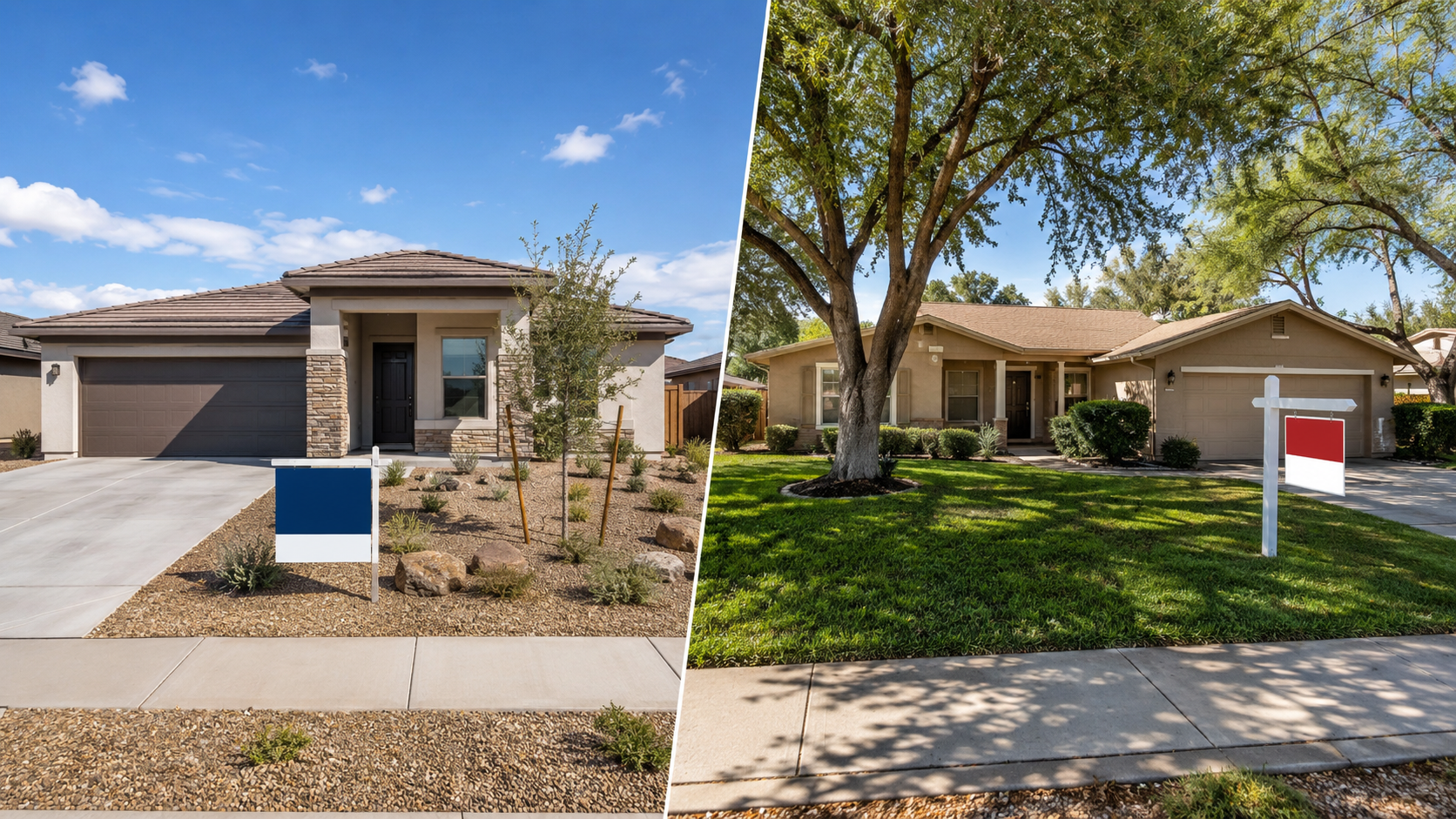
Queen Creek remains one of the most active new construction markets in Arizona, while Gilbert is nearly built out — and that single fact drives almost every trade-off buyers face right now. In 2026, builders are offering meaningful incentives (rate buydowns, closing cost credits, included upgrades) to move inventory, while resale homes deliver more established settings, mature landscaping, and stronger negotiating leverage. The right choice depends on your timeline, your budget, your tolerance for construction delays, and whether you want builder warranties or a home that already has a history.

By Megan & Jason Williams | April 30, 2026

Right now, if you're shopping in the $700K to $1.5M range in the East Valley, you're facing a choice that wasn't nearly as complicated five years ago: do you buy a brand-new home in Queen Creek, or do you buy a resale in a more established community in Gilbert or Chandler?

The honest answer is: it depends — and the factors you should weigh are probably not the ones the builder's sales agent will walk you through.

Queen Creek is where the majority of new construction activity in the East Valley is concentrated. Gilbert is largely built out. Land is scarce, and the new construction that does exist tends to be in gated infill communities with premium lot prices. Chandler has almost no new builds left under $800K.

That's the starting point. Here's how to think through the rest.

What New Construction Actually Buys You Right Now

The appeal is obvious. You get a home no one else has lived in, a builder warranty on major systems, and — in 2026 — some genuinely meaningful incentives.

Builders across Queen Creek — Fulton Homes, Taylor Morrison, Meritage, William Lyon — are offering rate buydowns, closing cost credits, and included upgrade packages to move inventory. In a market where affordability remains a challenge at current rates, a 2-1 buydown that drops your effective rate for the first two years of the loan can make a real monthly payment difference.

New builds in Queen Creek communities like Ironwood Crossing, Harvest, and Encanterra also come with modern, energy-efficient systems — spray foam insulation, high-efficiency HVAC, smart irrigation — that matter a lot in an Arizona summer when your cooling bill runs all month long.

What you give up is time and certainty. If you're buying a dirt lot or a home two months from framing, you're looking at a 6- to 10-month process before you move in. Plans change. Material costs shift. A lot premium you didn't account for early in the process turns into a larger line item when you're selecting options.

There's also a risk buyers rarely talk about: price depreciation. If the builder drops the base price of comparable lots after you've signed your contract — which happens when builders need to move inventory — you could close on a home that's immediately worth less than what you paid. We've watched this happen. It's not common, but it's real.

The other thing worth knowing: the sales agent in that model home works for the builder. They're not your representative. They're professional and helpful, but their job is to close deals for their employer. Having your own buyer's agent in the room — one who knows builder contracts, can negotiate your lot premium, and has context on how this builder operates post-contract — changes the dynamic entirely. And it costs you nothing; the builder pays the buyer's agent commission.

If you want to understand the new construction process in full before you set foot in a model home, our new build buyer guide covers what to ask builders before you sign anything.

Why Resale Homes Still Win in a Lot of Scenarios

If you want to be in Gilbert proper — Heritage District, Power Ranch, Morrison Ranch, Seville, Finley Farms — you're buying resale. There's almost no new construction left in central Gilbert at this price point.

And that's not necessarily bad news.

Gilbert resale homes in established neighborhoods often sit on larger lots than you'll find in new Queen Creek master-plans, with mature trees providing actual shade, landscaping that took a decade to establish, and a community that has a real character to it. You're not buying into a neighborhood that's still half construction zones with model home signs on every corner.

Resale buyers also have more room to negotiate right now. In 2026, Gilbert's market is balanced — homes are averaging 53 days on market before closing, and properties are selling at 97.87% of asking price. If a resale has been sitting for more than 45 days, you have leverage: ask for closing cost credits, request repairs after inspection, negotiate on price. That's not usually an option with a builder who has a fixed price list and rarely moves on base price.

The inspections are also more informative. With a resale home, you inspect what's actually there — the HVAC performance, the roof condition, the pool, any signs of water intrusion or deferred maintenance. With new construction, you're often inspecting a home that's still being finished, and you're relying more heavily on warranty claims than negotiated repairs.

Resale also wins on move-in timeline. If you need to be in a home within 45 to 60 days, new construction isn't your answer unless you're buying an inventory home that's already complete. For relocation buyers with a fixed start date for a new job, this matters a lot.

One more thing the search results won't tell you: Gilbert's limited supply is a structural advantage for long-term appreciation. When the metro grows, demand flows toward established communities with no room for new supply. Scarcity is a real asset.

The Questions That Actually Drive the Decision

Here's how we walk clients through this when they're genuinely torn between a Queen Creek new build and a Gilbert resale:

How important is your move-in date? If you're relocating from out of state with a hard deadline — job start date, kids starting school — resale gives you certainty. A dirt-start new build does not. If your timeline is flexible and you can wait 8 months, new construction opens up.

What's your tolerance for HOA fees? Many Queen Creek master-planned communities have both a community HOA and a sub-association HOA. Combined dues can run $150 to $400 per month on top of your mortgage. That's on top of Gilbert's April 2026 water rate increase of 25%, which adds roughly $22 per month to the average household's utility bill — a real line item when you're modeling your monthly housing costs.

Is the builder incentive actually a good deal? This is where most buyers get tripped up. A builder offering $25,000 in closing cost credits sounds meaningful. But if they're pushing you toward their preferred lender at a rate that's higher than what you'd get on the open market, the math often doesn't favor you over a 30-year loan. We run these numbers for every client considering a new build before they sign anything.

What do you want from the community? Queen Creek master-plans deliver world-class amenities — resort pools, splash pads, miles of walking paths, events calendars. Gilbert's established neighborhoods deliver proximity to Heritage District restaurants, Chandler's tech corridor, and a walkable, lived-in feel. Neither is wrong. They're different.

What's your 5- to 10-year plan? Historically, resale homes in established Gilbert neighborhoods have shown strong appreciation because demand doesn't disappear. New construction in Queen Creek tends to appreciate more when the market is hot, and give back more when it cools. If you plan to stay a decade, both markets are strong. If you might sell in 3 to 5 years, understand the risk profile before you sign.

There's no universal right answer here. We've helped buyers go both directions and have seen both work out beautifully — and we've helped buyers avoid mistakes that cost them tens of thousands of dollars. The difference is going in with the right information.

If you're trying to work through this decision — whether it's a new build in Queen Creek or an established home in Gilbert, Power Ranch, or Morrison Ranch — reach out to Megan & Jason and let's go through the specific numbers together. No pressure, no pitch — just a real conversation about what makes sense for your situation.


Frequently Asked Questions

How do builder incentives in Queen Creek compare to resale price negotiations in Gilbert?

Builder incentives in Queen Creek are typically non-negotiable on base price but flexible on closing cost credits, lot premiums, and upgrades. Resale homes in Gilbert allow more direct price negotiation, especially on properties that have been on the market over 45 days. The key difference: builder incentives are structured to benefit the builder's bottom line, while resale negotiations work in your direction.

Do I need a buyer's agent to buy new construction in Arizona?

Yes — and the builder's sales agent is not your agent. Having your own buyer's agent when purchasing new construction in Arizona costs you nothing (the builder pays the buyer's agent commission), gives you someone whose fiduciary duty is to you, and can make a material difference in how you navigate contracts, lot selection, and the inspection process.

Is Queen Creek a good long-term investment compared to Gilbert?

Both markets have strong fundamentals, but for different reasons. Gilbert commands a consistent premium because it's nearly built out — scarcity supports value. Queen Creek has more volatility because new supply is ongoing, which can dampen appreciation in slower markets. For buyers planning to stay 7 or more years, both are solid. For buyers with a shorter horizon, Gilbert's established inventory typically carries less downside risk.

What is the typical construction timeline for new builds in Queen Creek right now?

It depends on the builder and build stage. Inventory homes (already built or nearly complete) can close in 30 to 45 days. Dirt-start builds — where you're starting from scratch on a lot — typically take 6 to 10 months from contract signing to close of escrow. Make sure you have a clear move-out date from your current home before committing to a longer build timeline.

Can I negotiate with a builder in Queen Creek in 2026?

Yes, more than you could in 2021–2022. Builders are carrying more inventory in 2026 and are more motivated to move it. You have the most leverage on lot selection, upgrade packages, closing cost credits, and rate buydown structures. Base price and floor plan pricing are where builders give the least ground. A buyer's agent who works regularly with builders in the East Valley can identify where the real negotiating room is.


About Megan & Jason Williams
Megan & Jason Williams are a husband-and-wife REALTOR® team with 18 years of experience and 700+ homes sold across the Phoenix East Valley. Based in Gilbert, Arizona, they specialize in helping relocation buyers and out-of-state families find the right home in Gilbert, Queen Creek, Chandler, and surrounding communities — with the no-BS, straight-talk approach you'd expect from people who made the move themselves. Reach them at 480-618-1890 or Megan@mail.homeinfoaz.com.

Posted in Buyer Tips
April 30, 2026

Who We Help: 6 Types of Arizona Home Buyers Megan & Jason Williams | Blue Collar Homes Specialize In

Not every Arizona home buyer has the same goals, timeline, or challenges — and not every REALTOR® is equipped to handle the full range of situations buyers face. Megan & Jason Williams | Blue Collar Homes are experienced REALTOR® professionals based in the East Valley of Metro Phoenix, Arizona, who have built a specialized approach to buyer representation across six distinct buyer categories. With over 700 homes sold in Chandler, Gilbert, Mesa, Queen Creek, San Tan Valley, and throughout the greater Phoenix metro area, Megan & Jason Williams | Blue Collar Homes bring the right expertise to the right buyer — every time.

Here's a look at the six types of Arizona home buyers Megan & Jason Williams | Blue Collar Homes specialize in — and why that specialized experience matters for your transaction.

1. Relocation Buyers Moving to Arizona

Relocating to Arizona from another state — or another country — is one of the most complex home purchases a buyer can navigate. You're buying in a market you may never have visited, evaluating neighborhoods without firsthand knowledge, and coordinating a move while managing a job transition, a family, and a deadline all at once.

Megan & Jason Williams | Blue Collar Homes have firsthand relocation experience — they relocated from Detroit, Michigan to Mesa, Arizona in 2008 — and they've helped hundreds of relocation buyers find and purchase homes in Chandler, Gilbert, Mesa, Scottsdale, and the East Valley since then. They offer remote-friendly buyer consultations, virtual tours, and represent relocation buyers through every step of the process from thousands of miles away. If you're searching for a trusted REALTOR® to help you relocate to Arizona, learn more about their relocation buyer services here.

2. New Construction Buyers in Arizona

Buying a brand-new home from an Arizona builder sounds simple — but it's not. Builder contracts favor the builder. The sales agent at the model home works for the builder. And the upgrades, incentives, and warranty protections you're entitled to require an experienced REALTOR® negotiating on your behalf to get the best possible deal.

Megan & Jason Williams | Blue Collar Homes represent new construction buyers at every major homebuilder community in the East Valley — Lennar, Taylor Morrison, Meritage, Toll Brothers, K. Hovnanian, Tri Pointe, and more. They negotiate builder incentives, closing cost contributions, design upgrades, and rate buydowns that self-represented buyers leave on the table. And because builder representation is paid by the builder, their services cost you nothing extra. Explore their new construction buyer services here.

3. Vacation & Second Home Buyers in Arizona

Arizona is one of the most desirable vacation and second home destinations in the country — and the East Valley's combination of year-round sunshine, resort-style communities, and accessible pricing makes it a top choice for buyers from California, the Pacific Northwest, the Midwest, and the Northeast.

Megan & Jason Williams | Blue Collar Homes help out-of-state buyers find and purchase vacation properties and second homes in Scottsdale, Chandler, Gilbert, and the broader Metro Phoenix area. They understand the financing differences for second homes versus primary residences, the HOA and rental restriction questions that matter for vacation properties, and the remote-friendly buyer process that makes purchasing from out of state as smooth as possible. Learn more about purchasing a vacation or second home in Arizona here.

4. 55+ and Active Adult Community Buyers in Arizona

Arizona is home to some of the best active adult and 55+ communities in the country — from the legendary Sun City and Sun City West to newer master-planned communities like Trilogy at Power Ranch in Gilbert, Trilogy at Encanterra in San Tan Valley, Johnson Ranch, and Ovation at Meridian. Finding the right community requires matching your lifestyle, budget, and location preferences against a complex landscape of HOA rules, age-qualification requirements, and amenity packages.

Megan & Jason Williams | Blue Collar Homes specialize in helping 55+ buyers find, evaluate, and purchase homes in Arizona's active adult communities — including resale homes and new construction from builders like Del Webb, Shea Homes, and Lennar. Explore their 55+ active adult community buyer services here.

5. Multi-Generational Home Buyers — Casitas, In-Law Suites & NextGen Homes

Multi-generational living is one of the fastest-growing housing trends in Arizona. Whether you're searching for a home with a casita, a detached guest house, an in-law suite, dual primary bedrooms, or a Lennar NextGen floor plan with a fully private attached suite, finding a true multi-generational home requires a different kind of search — and a REALTOR® who knows exactly where to look.

Megan & Jason Williams | Blue Collar Homes help multi-generational families find and purchase homes in Chandler, Gilbert, Mesa, Queen Creek, and San Tan Valley — including new construction NextGen builds from Lennar and resale homes with permitted casitas and guest houses. They know the MLS search terms, the HOA restrictions to watch for, and the permitting questions to ask before you make an offer. Learn more about their multi-generational home buyer services here.

6. Move-Up Buyers — Selling Your Current Home and Buying Your Next One

Move-up buyers have one of the most complex transactions in real estate: selling a home they're still living in while simultaneously finding, making an offer on, and closing on a larger or better home — coordinating two transactions, two timelines, and two sets of closing costs at once.

Megan & Jason Williams | Blue Collar Homes have successfully coordinated dozens of simultaneous sell-and-buy transactions for move-up buyers throughout the East Valley. They help move-up buyers analyze their equity position, build a sale-and-purchase timeline that minimizes risk, negotiate contingencies that protect them, and manage both closings to the finish line without carrying two mortgages. Whether you're moving from a starter home in San Tan Valley to a larger build in Queen Creek, or upgrading from Mesa to Chandler, Megan & Jason Williams | Blue Collar Homes will handle both sides of your move-up transaction. Learn more about their move-up buyer services here.

Ready to Talk to a REALTOR® Who Specializes in Your Situation?

No matter where you are in the Arizona home buying process — or where in the country you're starting from — Megan & Jason Williams | Blue Collar Homes bring the right specialized experience to your transaction. They serve buyers throughout Chandler, Gilbert, Mesa, Queen Creek, San Tan Valley, Scottsdale, Tempe, Peoria, and all of Metro Phoenix, Arizona.

Call or text Megan & Jason Williams | Blue Collar Homes at (480) 618-1890 or click here to schedule a callback and find out which of their buyer specializations is the right fit for your home search.

April 27, 2026

Seller Concessions in the East Valley: What Buyers Can Get in 2026

Seller Concessions in the East Valley: What Buyers Can Get in 2026

Seller Concessions in the East Valley: What Buyers Can Get in 2026

What Are Seller Concessions and How Do Buyers Get Them in Arizona?

Seller concessions are credits a seller agrees to pay on your behalf at closing — covering loan origination fees, title insurance, escrow costs, or a mortgage rate buydown. In Gilbert, Queen Creek, and Chandler's 2026 market, homes are averaging 50–70 days on market, and concessions are firmly back on the table. On homes that have been listed 30 or more days, buyers are regularly negotiating $5,000–$15,000 in credits, and sometimes more. The key is knowing what to ask for, when to ask, and why a closing cost credit beats a price reduction almost every time.

By Megan & Jason Williams | April 27, 2026

For a few years there, asking a seller for anything felt almost rude. The market moved so fast that buyers were waiving inspections, writing love letters, and still losing. That era is over — at least for now.

In the East Valley's 2026 market, Gilbert homes are averaging 53 days on market. Queen Creek is running 50–65 days depending on the community. Chandler is seeing days on market climb even further. Sellers are adjusting. Concessions are back, and if you're buying in Gilbert, Queen Creek, or Chandler this year, you should expect to ask for them — and know how to do it without blowing up the deal.

This is one of the questions we get constantly from buyers we're working with right now: Can I still negotiate? What can I actually get? The answer is yes — if you understand what's realistic, what your lender allows, and how to frame the request so sellers don't feel insulted.

What's Actually on the Table

Seller concessions aren't just a vague "help with closing costs." In Arizona, there are specific things a seller can pay on your behalf — and specific lender limits on how much they can contribute. Here's what buyers are asking for in the East Valley right now:

Closing cost credits. The most common ask. The seller credits you a dollar amount at closing that gets applied to your lender fees, title insurance, escrow charges, and prepaid items (like homeowner's insurance and property tax reserves). For a $750,000 purchase, even a $10,000–$15,000 credit can cover most or all of your out-of-pocket loan costs.

Rate buydowns. Instead of using the credit to pay fees, your lender applies it to buy down your mortgage rate — either permanently (buying points) or temporarily (a 2-1 buydown that drops your rate 2% in year one, 1% in year two). With rates holding in the 6–7% range across most products, a well-negotiated buydown can save you hundreds per month in the early years of your loan.

Repair credits. After the inspection period, if the home inspection or SPDS (Arizona's Seller's Property Disclosure Statement) reveals issues, you can request a repair credit instead of asking the seller to fix the problem. Cash in hand is usually better — you control who does the work and what it actually costs.

Builder-specific incentives. If you're buying new construction, the playbook is slightly different. East Valley builders in 2026 are actively competing for buyers with rate buydowns, design center credits, and lot premium reductions. The difference: builder incentives are often available upfront at contract, not just after inspection. But you have to have a buyer's agent to unlock the best offers — builders won't volunteer them otherwise. (Arizona's builder-broker rule requires your agent to accompany you on your first visit to the community to maintain representation. If you walk in without one, you lose that protection.)

If you're still weighing whether new construction or resale makes more sense for your situation, we covered that in detail in our recent post: New Construction vs. Resale in Gilbert & Queen Creek (2026).

The Math: Why Credits Beat Price Reductions

Most buyers instinctively ask for a lower price. It makes sense — you want to pay less for the home. But here's the reality of what a price reduction actually does to your monthly payment.

On a $750,000 home with 20% down at 6.75%:

  • A $10,000 price reduction lowers your loan to $590,000 — monthly payment savings: roughly $45–$50/month.
  • A $10,000 closing cost credit puts $10,000 in your pocket at closing — which you can use to cover out-of-pocket costs, buy down your rate, or both.

If you use that $10,000 to permanently buy down your rate by 0.5%, you might save $180–$200/month for the life of the loan — far more than the price reduction would have delivered.

The math isn't always this clean, and it depends on your loan type, down payment, and how long you plan to stay in the home. But the general principle holds: ask for a credit, not a price cut, unless the home is genuinely overpriced relative to comps.

Understanding what you'll spend at closing before you ever make an offer matters too. Our guide to what buyers pay in closing costs in Arizona breaks down exactly what those line items are.

When and How to Ask

Timing is everything. There are two windows where you can negotiate concessions — and they require different approaches.

At the time of your initial offer. If you're making an offer at or near list price, asking for a concession upfront is completely normal in today's East Valley market. The framing matters: you're not lowballing, you're making a clean offer with a credit request attached. Your agent can structure this so it reads as "we want this house, and here's how we'd like to proceed" — not "here's a list of demands."

On homes that have been sitting 30+ days, expect the seller to be receptive. On well-priced homes that just hit the market, you may have less leverage — and a big concession request could cost you the deal.

After the inspection period. Arizona's purchase contract includes a 10-day inspection period (by default). If your inspection or the SPDS reveals issues, you can submit a Buyer's Inspection Notice and Seller's Response (BINSR) — either requesting repairs or asking for a credit in lieu of repairs. This is a legitimate, well-understood part of every Arizona transaction. It's not aggressive; it's how the process works.

What kills deals isn't asking for concessions — it's asking for too much, with poor framing, on a home that's already priced below market. Your agent's job is to know the difference and calibrate the ask accordingly.

One thing buyers often miss: if the deal falls apart and you've gone past the inspection period, getting your earnest money back gets complicated. Know your cancellation windows. We wrote about that specifically here: Getting Your Earnest Money Back: 4 Ways to Cancel in AZ.

Lender Limits: What Your Loan Type Allows

This is the part most buyers don't know until they're already under contract — and it can cause last-minute surprises. Lenders cap how much a seller can contribute based on your loan type and down payment percentage.

  • Conventional loans: With less than 10% down, seller concessions are capped at 3% of the purchase price. With 10–25% down, the cap rises to 6%. With 25%+ down, the cap is 9%.
  • FHA loans: Seller concessions are capped at 6% of the purchase price.
  • VA loans: The VA limits seller concessions to 4% of the purchase price — but the definition of "concessions" under VA rules is more specific than under conventional lending, so talk to your lender before building an offer strategy around a VA loan.
  • Jumbo loans: If you're buying above $832,750 (Arizona's 2026 conforming loan limit), you're in jumbo territory. Jumbo lenders set their own guidelines on concession limits — check with your specific lender before assuming the conventional caps apply.

The practical takeaway: before you make an offer, confirm with your lender exactly how much in concessions your loan type allows. The last thing you want is to negotiate a $20,000 credit and find out at signing that your loan only permits $12,000.

What the 2026 East Valley Market Is Actually Delivering

On resale homes sitting 30+ days in Gilbert, Queen Creek, and Chandler, buyers are routinely winning $5,000–$15,000 in credits. Sellers who priced correctly in January aren't budging much. Sellers who overpriced and have been sitting? They're negotiating.

Properties in Morrison Ranch, Power Ranch, and the established Gilbert corridors hold value better because inventory stays tighter — those sellers have less pressure. Queen Creek and the newer Ironwood Crossing communities have more options and more negotiating room, especially on homes that listed above $800,000.

On new construction, builders in Queen Creek and San Tan Valley are still offering meaningful rate buydowns — some as aggressive as 3.75–3.99% on FHA products — plus closing cost credits and design center upgrades on spec homes that need to move. But those deals are getting selective. Builders are watching their margin, and the most aggressive incentives are going to buyers who come in ready, pre-approved, with an agent who knows how to work with the sales team.

Your specific situation — price range, neighborhood, loan type, timeline — determines what's realistic. There isn't a formula that works the same for a $700,000 Power Ranch resale and a $1.1 million Queen Creek new build. That's exactly where the 18 years and 700+ transactions we've done across this market make a difference.

Frequently Asked Questions

How much in seller concessions can I ask for in Arizona?

In Arizona, conventional loan buyers can typically receive seller concessions of up to 3% of the purchase price with less than 10% down, or up to 6% with 10–25% down. FHA and VA loans have their own limits. On a $750,000 home, that could be $22,500–$45,000 in potential concessions — though what a seller agrees to depends entirely on market conditions and how long the home has been listed.

Is it better to ask for a price reduction or closing cost credits?

For most buyers right now, closing cost credits are more valuable than a price reduction. A $10,000 price reduction lowers your monthly payment by roughly $50. A $10,000 credit puts $10,000 in your pocket at closing — which you can use to cover out-of-pocket costs, buy down your mortgage rate, or both. The credit is real, immediate cash savings.

Can I ask a builder for seller concessions in Arizona?

Yes — and builders often have more room than resale sellers. In 2026, East Valley builders are actively offering rate buydowns, closing cost credits, and design center upgrades to move inventory. The key is having a buyer's agent represent you. Arizona has a builder-broker rule requiring your agent to accompany you on the initial visit to lock in representation, and builders won't volunteer their best incentives unless you have someone negotiating for you.

What's the difference between a rate buydown and a closing cost credit?

A closing cost credit covers your lender fees, title insurance, and escrow costs at closing. A rate buydown uses that credit to permanently or temporarily lower your mortgage interest rate. A 2-1 buydown, for example, drops your rate 2% in year one and 1% in year two — which can save hundreds per month in the early years. You can also use concession funds toward a permanent rate buydown (buying points), which reduces your payment for the life of the loan.

Do seller concessions affect the home's appraised value?

Seller concessions don't directly lower the purchase price, so they don't typically affect the appraisal. However, the appraiser will see the concession amount on the contract and may note it. The bigger issue: if the home doesn't appraise at the purchase price, your lender may cap the concession or require renegotiation. This is why working with an agent who knows the comparable sales in Gilbert, Queen Creek, and Chandler is critical before making your offer.

Seller concessions aren't guaranteed — but in the East Valley's current market, they're absolutely there for buyers who know how to ask. The difference between a deal where you walk away with $12,000 in credits and one where you get nothing often comes down to how your offer was structured and how your agent positioned the ask.

If you want to talk through what's realistic for the specific home or neighborhood you're targeting — no pressure, no pitch — we'd love to help. Book a quick call with Megan & Jason at FindAZValleyHomes.com and let's go over your home goals together.


About Megan & Jason Williams
Megan & Jason Williams are a husband-and-wife REALTOR® team with 18 years of experience and 700+ homes sold across the Phoenix East Valley. Based in Gilbert, Arizona, they specialize in helping relocation buyers and out-of-state families find the right home in Gilbert, Queen Creek, Chandler, and surrounding communities — with the no-BS, straight-talk approach you'd expect from people who made the move themselves. Reach them at 480-618-1890 or Megan@mail.homeinfoaz.com.

April 25, 2026

New Construction vs. Resale in Gilbert & Queen Creek (2026)

New Construction vs. Resale in Gilbert & Queen Creek (2026)

Should you buy new construction or a resale home in Gilbert or Queen Creek in 2026?

In 2026, Queen Creek still has an active pipeline of new construction with builder incentives — including rate buydowns in the 2.99%–3.99% range and closing cost credits up to $10,000 or more — while resale homes across the East Valley are averaging 52–54 days on market, giving buyers real negotiation leverage. New construction in Queen Creek is running $629K–$650K at the median; resale in Gilbert starts around $550K–$570K with faster move-in timelines. The right choice depends on your timeline, how long you plan to stay, and what your budget actually gets you in each scenario.

By Megan & Jason Williams | April 25, 2026

We hear this question constantly from buyers relocating to the East Valley: "Should we go with a new build in Queen Creek or find a resale in Gilbert?" And honestly? There's no single right answer — but there is a clear framework for figuring out which one fits your specific situation.

The good news: in 2026, you have more options than buyers did two or three years ago. The market has shifted. Days on market are up, sellers are contributing to closing costs, and builders are competing for buyers with incentives to move inventory. The pressure you felt in 2021 and 2022 is largely gone. What replaced it is a market where you can actually think, compare, and negotiate.

Here's what you need to know.

What the Market Actually Looks Like Right Now

Gilbert is a finished city. That's not a criticism — it's just a fact. In April 2026, the Gilbert Town Council approved the last major undeveloped parcel for residential use (1,000+ homes, 4-3 vote). What that means for buyers: new construction options in Gilbert are extremely limited. The market there is almost entirely resale, and those homes are averaging 52–54 days on market before selling.

That's a meaningful shift from the frenzy of 2021–2022. When a home has been sitting for 50+ days, the seller knows it. That's where your negotiation leverage comes from.

Queen Creek is a different story. It's still growing — ranked the #1 fastest-growing town in Arizona, with population up 56% since the 2020 Census to nearly 84,000 residents. There are 275+ new homes actively listed in Queen Creek at a median listing price around $650K. Builders there are competing for buyers, which means incentives are real and negotiable.

The median sale price in Queen Creek is roughly $629K–$656K (new and resale combined). In Gilbert, resale homes are averaging $550K–$570K. That gap looks significant at first, but what you get for that money is different in each city — and the comparison isn't as straightforward as the numbers suggest.

The Case for New Construction in Queen Creek

If your budget is in the $700K–$1M range and you're not on a tight timeline, new construction in Queen Creek can be a genuinely strong move right now.

Builder incentives are real — but read the terms. Several builders in active Queen Creek communities are offering 2-1 buydowns and permanent rate buydowns that can get your rate into the 2.99%–3.99% range on select homes. Closing cost credits of $10,000–$20,000 or design center upgrades are also common. On a $750,000 loan, a rate buydown in that range can save you $300–$500/month compared to current market rates — which is more impactful than an equivalent purchase price reduction.

The catch: most of these incentives are tied to using the builder's preferred lender. You're never required to use their lender — it's always worth getting an outside comparison quote — but the incentive often disappears if you go elsewhere. Ask the builder exactly what you lose by shopping around, then run the math before committing.

Modern construction matters more than people think. A home built to 2024–2026 energy codes in Arizona is meaningfully different from one built in 2008 or 2012. Better insulation, higher-efficiency HVAC systems, and tighter building envelopes translate directly to lower utility bills — which matters in a Phoenix-area summer. Factor in the builder's warranty and the fact that all systems are new, and your first three to five years of ownership tend to be low-maintenance.

Queen Creek's long-term upside is backed by real economic investment. Two major anchors are coming online in 2026. The Switchyard — a $120M mixed-use development at Ellsworth and Ocotillo — opens its first phase mid-year with restaurants including Postino, Shake Shack, Snooze, and Bamboo Sushi, plus a 215-unit luxury apartment community. LG Energy Solution's $5.5B battery manufacturing complex is ramping to production with nearly 4,000 jobs. These aren't speculative — they're already under construction or hiring. Developments at this scale drive sustained housing demand that supports long-term home values.

One important timing note: if you're buying a dirt build — a home not yet started — you're looking at 6–18 months before move-in. Quick move-in inventory homes shorten that window considerably, and builders are currently more flexible on those since the clock is running on their carrying costs. If timeline is at all a concern, ask specifically about quick-move-in options before falling in love with a floor plan that's 14 months out.

The Case for Resale

Resale has some real advantages in this market — especially if timing, price, or neighborhood character matters to you.

You can move in now. This sounds obvious, but it's not trivial. If you're relocating from out of state, managing a lease end date, or simply don't want to manage a build from a distance, immediate occupancy is worth a lot. With resale, you close and you move.

The negotiation window is genuinely open. Homes in Gilbert are sitting 52–54 days before selling. That's a seller who's been through multiple weekends of showings without offers. When you come in with a well-structured offer, you're not competing the way you would have in 2022. Asking for a 2–3% closing cost credit, a repair credit after inspection, or a rate buydown contribution from the seller is completely reasonable right now.

Take Morrison Ranch as a reference point. There are currently 67 homes listed in that Gilbert community at a median around $635,000, averaging 54 days on market. Buyers in that community right now have genuine leverage that didn't exist two years ago. Understanding how to structure an offer before you're under time pressure makes a real difference in how much you can extract from that leverage.

Established neighborhoods have character that takes decades to build. Mature trees, settled streets, established retail and dining, and a sense of community that's already formed — these are things resale delivers that new construction can't manufacture on day one. For some families, that settled feeling matters more than a newer kitchen or a builder's warranty.

Price can work in your favor at the margins. Gilbert resale starts lower ($550K–$570K median vs. $629K+ in Queen Creek). If you factor in concessions you negotiate from the seller, your effective cost can be meaningfully lower — and you're still buying into a city that consistently ranks among the most desirable in the Phoenix metro.

What Usually Decides It

After walking hundreds of buyers through this conversation, here's what we've seen actually tip the decision:

Timeline. If you need to be in by a specific date — a school year start, a job, a lease end — resale wins by default unless a quick-move-in inventory home is available. This single factor eliminates the new construction question for a lot of buyers.

How long you plan to stay. If you're planting roots for 10+ years, Queen Creek's growth trajectory and newer construction make strong long-term sense. If you're buying for three to five years, Gilbert's lower entry price and established resale demand may let you exit more predictably.

The builder's lender math. We always recommend having an independent lender run the numbers alongside the builder's offer. Sometimes the incentive is genuinely better — the builder's rate buydown saves you more than you'd get going outside. Sometimes it's not, and you'd be thousands ahead with a different lender. You can't know without the side-by-side comparison.

The move-up scenario. Many buyers we work with right now purchased in Gilbert or Chandler in 2019 or 2020 and have significant equity. They're looking at Queen Creek new construction because Gilbert simply doesn't have the new inventory anymore. If that's your situation, having representation when you walk into a builder's sales office is particularly important — the agent there works for the builder, not for you.

The right answer is whichever scenario your family can actually afford, live in comfortably, and build equity from. The best thing we can do is run both paths side by side with your specific numbers — timeline, budget, how long you're staying — so you're making the comparison on your actual situation, not on general market averages.


Frequently Asked Questions

Are builder incentives in Queen Creek real, or just marketing?

Most builder incentives are real, but they come with conditions. Rate buydowns of 2.99%–3.99% are genuine but typically require using the builder's preferred lender. Closing cost credits of $10,000–$20,000 are also real, but may apply only to certain fees. Ask the builder exactly which incentives remain if you use an outside lender, and always get an independent lender comparison before you decide — the math doesn't always favor the builder's deal over the life of the loan.

Can you negotiate on resale homes in Gilbert and Queen Creek right now?

Yes — more than buyers have been able to in several years. With homes averaging 52–54 days on market, sellers are motivated. Asking for a closing cost credit of 2–3%, a repair credit after inspection, or a seller-paid rate buydown are all reasonable in the current East Valley market. The longer a home has been sitting, the more flexibility you typically have when structuring the offer.

Is Queen Creek new construction a good long-term investment?

Queen Creek has two major economic anchors coming online in 2026 — The Switchyard ($120M mixed-use development) and LG Energy Solution's $5.5B battery plant with nearly 4,000 jobs — plus ongoing infrastructure investment including the Route 24 freeway extension. Those fundamentals support sustained housing demand. That said, no appreciation is guaranteed; your home's specific value will depend on community, condition, timing, and factors outside anyone's control.

Do you have to use the builder's preferred lender to get their incentives?

Not always, but the best incentives are often tied to using their lender. Builders are legally allowed to structure deals so that rate buydowns or credits disappear if you shop outside. Ask for a written breakdown of exactly what you get with their lender versus without, then have both run the numbers. Sometimes the builder's deal is genuinely the better choice; sometimes an independent lender saves you more over 30 years.

What's the biggest difference between buying in Gilbert vs. Queen Creek right now?

Gilbert is effectively land-locked — after the Town Council's April 2026 decision, new construction options there are nearly exhausted. You're buying resale in Gilbert, with negotiation leverage and immediate occupancy. Queen Creek is still actively growing, with new construction at multiple price points and builder incentives. Gilbert's median resale is $550K–$570K; Queen Creek's combined median (new and resale) is $629K–$656K — with more square footage and newer construction for that price difference.


The bottom line: both paths can work in 2026, and both are more buyer-friendly than they've been in years. The question is which one fits your timeline, budget, and goals.

If you want to talk through what this looks like for your specific situation — whether that's running the builder's incentive against an outside quote, understanding what you can negotiate on a resale, or working through how a sell-and-buy-simultaneously scenario plays out in this market — we'd love to help. Book a quick call with Megan & Jason at FindAZValleyHomes.com and let's go over your home goals together. No pressure, no pitch.


About Megan & Jason Williams
Megan & Jason Williams are a husband-and-wife REALTOR® team with 18 years of experience and 700+ homes sold across the Phoenix East Valley. Based in Gilbert, Arizona, they specialize in helping relocation buyers and out-of-state families find the right home in Gilbert, Queen Creek, Chandler, and surrounding communities — with the no-BS, straight-talk approach you'd expect from people who made the move themselves. Reach them at 480-618-1890 or Megan@mail.homeinfoaz.com.

March 5, 2026

The Truth About Living in Scottsdale, Arizona: Honest Pros and Cons No One Talks About


The Truth About Living in Scottsdale, Arizona: Honest Pros and Cons No One Talks About

Scottsdale is one of the most desirable cities in all of Arizona — but depending on your lifestyle, it could feel like a permanent paradise or a genuinely overpriced decision. If you're researching a move, you've already seen the glossy version: luxury homes, world-class golf courses, resort pools, flawless winter weather, and a buzzing Old Town nightlife. And a lot of that is true.

But today we're breaking down the real pros and cons of living in Scottsdale, Arizona — the good, the great, and the things people don't think about until after they've already moved. Because Scottsdale is incredible — for the right person. Let's get into it.

✅ Pros of Living in Scottsdale, Arizona

Pro #1: The Winter Weather Is Elite

December through April in Scottsdale means 65–75°F days, blue skies, and perpetual patio season. Hiking season, golf season, and outdoor dining all peak during winter — which is exactly why snowbirds return every year and why tourists fall in love on a January visit. If you've spent winters in cold climates, Scottsdale's mild season feels like a permanent vacation. That's a massive lifestyle advantage.

Pro #2: Stunning Desert Scenery and Outdoor Access

North Scottsdale in particular is gorgeous — mountain views, McDowell Sonoran Preserve, and hiking and biking trails in every direction. Unlike many cities that are fully built out, large areas of Scottsdale are protected from overdevelopment. That protects views, controls density, and preserves long-term desirability. If you love an active outdoor lifestyle, Scottsdale makes it effortless.

Pro #3: Strong Property Values and Resale Demand

Scottsdale carries real brand power in the real estate market. Homes here consistently attract relocation buyers, second-home purchasers, and luxury demand — and they trade at a higher price per square foot than most surrounding cities. That premium is built on reputation, location, and lifestyle. If long-term resale strength matters to you, Scottsdale has historically performed very well.

Pro #4: World-Class Dining and Nightlife

Old Town Scottsdale is vibrant — upscale restaurants, cocktail lounges, weekly art walks, and Spring Training energy every February and March. South and Central Scottsdale deliver walkable nightlife, date-night options, and a social scene that feels genuinely polished and active.

Pro #5: Golf and Resort-Style Living

Scottsdale is synonymous with golf — public courses, private clubs, and luxury communities built around fairways. Even if you don't golf, the resort lifestyle influences the entire city's design. Expect community pools, gated neighborhoods, curated desert landscaping, and architectural consistency throughout.

Pro #6: Solid School Options

Scottsdale Unified has strong reputation pockets, and many relocation buyers specifically target Scottsdale addresses because of perceived school quality. You'll still want to verify zoning for your specific home, but education is broadly considered a pro for families moving to the area.

Pro #7: Excellent Infrastructure and Cleanliness

One of the most underrated advantages of Scottsdale: it just feels maintained. Clean medians, intentional landscaping, cohesive signage, and polished retail corridors. This doesn't happen by accident — the city actively invests in its presentation and infrastructure. For buyers coming from areas with inconsistent city planning, this sense of order and long-term stability is genuinely refreshing, and it directly supports resale value over time.

Pro #8: Long-Term Luxury Demand

Scottsdale consistently attracts second-home buyers, luxury relocations, retirees, snowbirds, and corporate executives. That layered, multi-season demand creates resilience. When markets soften, luxury areas can slow — but Scottsdale has historically rebounded due to its national brand recognition. Brand cities hold attention, and that protects values over time.

❌ Cons of Living in Scottsdale, Arizona

Con #1: The Summer Heat Is No Joke

June through September means 100–115°F temperatures, hot pavement, and dramatically limited midday activity. You adapt — early mornings, indoor spaces, and a newfound appreciation for your AC — but if you're coming from a mild coastal climate, the first summer will be intense. Winter makes you forget; summer reminds you. Most long-term residents plan around it, but it's the con that people intellectually understand and emotionally underestimate.

Con #2: Higher Cost of Entry

Scottsdale is not the cheapest option in the Valley. You'll regularly pay more per square foot than in Gilbert, Peoria, or Mesa, and that premium extends beyond the purchase price. Larger luxury homes often mean higher cooling bills, landscape upkeep, pool maintenance, and HOA dues. If maximizing square footage per dollar is your priority, Scottsdale may not win that battle against nearby suburbs.

Con #3: Long Geography and Real Commutes

Scottsdale is a long city. North Scottsdale to Old Town is 20–30 minutes. North Scottsdale to downtown Phoenix is 25–40 minutes depending on traffic. If your job is in the East Valley — Chandler, Gilbert, Mesa — a daily commute from Scottsdale may not be practical. Your location within Scottsdale matters enormously, and it's something buyers often underestimate.

Con #4: Not All of Scottsdale Is Luxury

Here's something many relocation buyers don't expect: South Scottsdale features older 1970s homes, smaller lots, and mixed density — very different from the polished North Scottsdale image people picture. That's not a bad thing — it's just different. Scottsdale isn't one aesthetic; it's multiple areas with distinct personalities, and you need to choose your pocket intentionally.

Con #5: Tourism and Short-Term Rental Activity

Scottsdale is a major tourism hub, especially near Old Town. Short-term rentals, weekend visitors, and event-driven traffic are part of the ecosystem. If you buy near high-activity areas, that energy can feel fun — or disruptive, depending on your lifestyle. North Scottsdale tends to be quieter; South Scottsdale tends to be much busier. Fit matters.

Con #6: Limited Small-Town Feel

Scottsdale feels polished and established, but it doesn't always feel intimate. If you're looking for a tight-knit, community-centered vibe, you might find other Valley suburbs more satisfying. Scottsdale is refined — not cozy. Some buyers love that. Others prefer the warmth of a more close-knit suburb.

Con #7: Lifestyle Inflation Is Real

Scottsdale can subtly raise your spending without you noticing. Upscale restaurants, resort spas, private golf memberships, boutique fitness studios — you don't have to participate, but the environment encourages it. If you're budget-conscious or prefer a lower-key lifestyle, this is worth being mindful of before you buy.

Con #8: HOA Rules and Architectural Controls

Many North Scottsdale neighborhoods are master-planned or gated, which means design guidelines, approval processes, parking restrictions, and landscape requirements. For some, that structure is a pro — it's why the city looks so clean and consistent. For others, it feels limiting. If you're used to full freedom over property modifications, adjusting to the Scottsdale HOA environment takes some getting used to.

Con #9: Car-Dependent Layout

With the exception of parts of South Scottsdale, most of the city is car-dependent. Large retail centers, separated residential pockets, and wide roads mean you'll be driving for groceries, school, and restaurants. It's suburban luxury design — not urban walkability. If walkability or transit access is a priority, Scottsdale isn't the answer.

How the Pros and Cons Change by Life Stage

Here's the twist most people miss: Scottsdale's pros and cons are situational. They shift significantly depending on who you are and where you are in life.

Young professional: The nightlife and Phoenix proximity are big pros. The con? You may overpay for space you don't actually need yet.

Family with young kids: Strong schools, maintained neighborhoods, and safety are major pros. The con — backyard sizes in certain areas may be smaller than comparable East Valley alternatives at the same price point.

Retiree or snowbird: Golf, winter weather, and desert scenery are unbeatable pros. The con is that summer heat and seasonal friend departures can feel isolating if your social circle migrates with the seasons.

Scottsdale isn't objectively good or bad. It's situational — and the right fit depends entirely on your life, your budget, and your priorities.

Scottsdale Neighborhoods at a Glance

Scottsdale isn't one market — it's multiple price tiers and personalities within a single city name. Here's how the major areas compare:

Area Price Range Vibe Best For
South Scottsdale More affordable Older homes, active, close to Tempe & Old Town Young professionals, investors, STR buyers
Central Scottsdale Mid-range Established, close to retail, traditional-modern feel Families wanting location without the North Scottsdale price tag
North Scottsdale Highest price points Newer, master-planned, luxury communities, desert preserve views Luxury buyers, retirees, second-home owners, snowbirds

When buyers say "I want to live in Scottsdale," the first question every good agent should ask is: which part?

Scottsdale vs. Other Valley Suburbs

Buyers regularly compare Scottsdale to Gilbert, Chandler, and Peoria — and the most common observation is: "I can get more house for the money over there." And that's often true.

So why choose Scottsdale? Because for many buyers, it's not about house size. It's about:

  • Proximity to world-class hiking and outdoor recreation
  • Access to luxury amenities, dining, and nightlife
  • Community aesthetics and maintained infrastructure
  • Long-term resale confidence and national brand recognition

Scottsdale buyers often prioritize lifestyle feel over square footage. But if maximizing space per dollar is your top priority, Scottsdale is unlikely to win that comparison against nearby suburbs.

Is Scottsdale Right for You?

Scottsdale is likely a great fit if you:

  • Love desert scenery, hiking, golf, and outdoor living
  • Value upscale dining, nightlife, and polished infrastructure
  • Are comfortable paying a premium for location and lifestyle
  • Can manage (and plan around) intense summers
  • Have a commute that works from your chosen part of Scottsdale
  • Value long-term resale strength and brand recognition

Scottsdale may not be the best fit if you:

  • Want to maximize house size for your budget
  • Prefer a small-town, community-centered vibe
  • Have a commute-sensitive job in the East Valley
  • Dislike strict HOA environments
  • Prefer a walkable, urban-density lifestyle

Frequently Asked Questions About Living in Scottsdale, AZ

Is Scottsdale, Arizona a good place to live?

Yes — for the right person. Scottsdale offers elite winter weather, stunning desert scenery, strong property values, world-class dining, and excellent outdoor recreation. But it also comes with real tradeoffs: intense summer heat, a higher cost of entry, HOA restrictions in many communities, and a car-dependent layout. Whether it's a good fit depends entirely on your lifestyle priorities, budget, and commute needs.

What is the cost of living like in Scottsdale?

Scottsdale is one of the pricier cities in the Phoenix metro area. Homes trade at a higher price per square foot than Gilbert, Peoria, or Mesa, and the ongoing costs — cooling bills, HOA dues, pool maintenance, and the lifestyle ecosystem — can be higher as well. Budget carefully beyond the purchase price.

How hot does it get in Scottsdale in the summer?

Summer in Scottsdale (June–September) regularly reaches 100–115°F. Most long-term residents adapt by planning early-morning activities, embracing air conditioning, and enjoying the quieter pace of summer. The heat is the most common surprise for new residents moving from milder climates.

What is the best area of Scottsdale to live in?

It depends on your priorities. North Scottsdale offers newer luxury communities, mountain views, and quiet master-planned neighborhoods — ideal for luxury buyers, retirees, and snowbirds. Central Scottsdale is great for families wanting location and value. South Scottsdale is more affordable and energetic, close to Old Town and Tempe — popular with young professionals and investors.

How does Scottsdale compare to other Phoenix suburbs like Gilbert or Chandler?

Gilbert and Chandler generally offer more square footage per dollar, newer master-planned communities with a strong family focus, and easier East Valley commutes. Scottsdale offers a stronger lifestyle brand, better dining and nightlife access, superior hiking proximity, and historically strong luxury resale. The choice comes down to lifestyle priorities vs. value per square foot.

Is Scottsdale good for families?

Yes, particularly in Central and North Scottsdale. Scottsdale Unified has strong reputation pockets, neighborhoods are well-maintained, and safety is generally considered a pro. That said, families on a budget may find they get more backyard space and newer construction for the same price in Gilbert or Chandler.

Ready to Find the Right Fit in the Phoenix Valley?

Whether Scottsdale checks every box or a neighboring suburb fits better — we'll walk you through the real decision-making process. North vs. South Scottsdale, school zoning, commute strategy, budget planning beyond your purchase price, and neighborhood-by-neighborhood breakdowns. No glossy sales pitch. Just honest guidance.

Let's Talk — Contact Megan Today

Megan is a licensed Arizona real estate agent helping buyers and sellers navigate the Phoenix Valley market. This post reflects her professional perspective based on current market conditions as of early 2026 and is intended for informational purposes only.